Digital Home Thoughts - News & Reviews for the Digital Home

Be sure to register in our forums and post your comments - we want to hear from you!


Zune Thoughts

Loading feed...

Apple Thoughts

Loading feed...

Laptop Thoughts

Loading feed...


All posts tagged "tom's hardware"


Friday, April 29, 2011

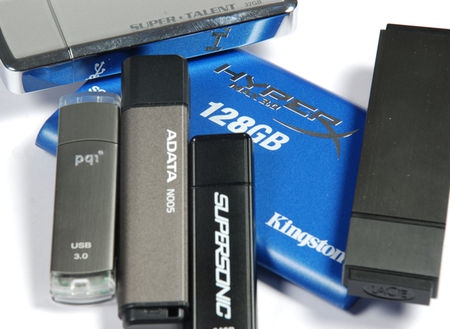
Nine USB 3.0 Flash Drives Compared

Posted by Richard Chao in "Digital Home Hardware & Accessories" @ 08:18 PM

http://www.tomshardware.com/reviews...drive,2900.html

"We found wildly disparate transfer rates ranging from 200 MB/s down to a snail's pace. At the end, though, two products rose to the top of our list."

Just like USB 2.0 flash drives, USB 3.0 flash drives can vary significantly from model to model. If you are looking to pick up one of the new USB 3.0 flash drives, you can test and try the various models to see which is the best suited for you in terms of storage space, price and performance by yourself. Or you can take a look at this comparison done by Tom's Hardware of some of the more popular models currently available.


Friday, March 26, 2010

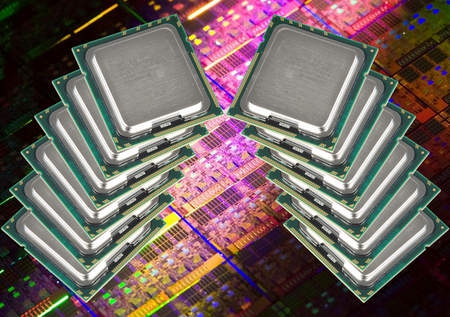
Toms Hardware Asks: Do You Want 6 Cores Or 12 Threads?

Posted by Andy Dixon in "Digital Home Hardware & Accessories" @ 03:00 AM

http://www.tomshardware.com/reviews...-980x,2584.html

"Intel first used Hyper-Threading when it introduced the Pentium 4 "Northwood" processor at 3.06 GHz and the Xeon MP "Foster" series in 2002. The proprietary technology's main purpose is to improve processor utilization through increased parallelization. With the latest Core i7-980X and its six physical cores, Hyper-Threading yields 12 logical cores on desktop PCs. This raises the question: how much of the software that you run truly takes advantage of eight or more threads? Is Hyper-Threading good or bad for power efficiency? And wouldn't it make more sense to stay with six physical cores, rather than risking performance hits caused by less-heavily-threaded applications unnecessarily distributing workloads to logical units?"

I raised the question a few news posts back about how CPU's are progressing faster than current software's ability to use the power of all these extra cores. Toms Hardware have produced an article asking this exact question, especially as Intel are now releasing their high end chips with Hyper Threading enabled again, giving six core chips an extra six virtual cores. So can software take advantage of all these extra cores? Take a read and see what they conclude.


Thursday, March 4, 2010

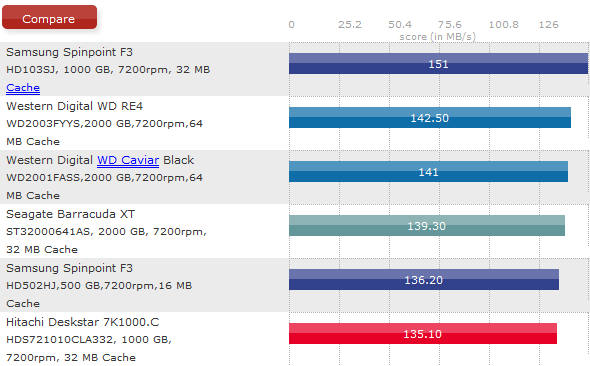
Looking for Performance Benchmarks? Check out Tom's Hardware

Posted by Jason Dunn in "Digital Home Articles & Resources" @ 08:00 PM

http://www.tomshardware.com/charts/

Tom's Hardware is one of the best sites out there for really understanding computer hardware, and they have a section I hadn't noticed before: the Performance Charts. They've collected benchmark information from their various reviews and plugged the results into this system, and it allows you to look at a particular category of hardware (say, hard drives) and drill down to see exact benchmark results - like the read performance using h2benchw for instance. It makes it much easier to pick the exact hardware you want!


Thursday, August 6, 2009

Tom's Hardware Revisits the Value of Multiple Cores

Posted by Hooch Tan in "Digital Home News" @ 01:00 PM

http://www.tomshardware.com/reviews...mance,2373.html

"A few months ago, we looked into the effectiveness of using different numbers of CPU cores with various types of software. We received a lot of good feedback from that article, and there were some interesting suggestions from the community that we've taken to heart in this follow-up."
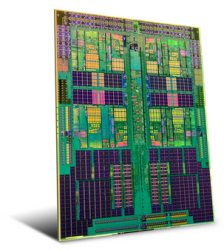
A while back, Tom's Hardware did some tests to find out that most anyone stood to benefit from multi-core CPUs though those benefits diminished as the number of cores went past 3. In revisiting this issue, they've improved their testing methodology and found that not much has changed. The change from single to dual cores is quite dramatic and desirable, though for regular day to day use, triplets and more are not really that necessary. Of course, ethusiasts are we all are, it makes sense, but if you look at the netbook market, the majority of them are still single core workhorses, and many people are finding them adequate to the task. That realization has me believe that single core CPUs will still be around for quite some time to come, though they will be found with a lot of supplmentary horsepower to handle specialized tasks, like NVidia's ION, which handles video processing. I've only halfway migrated to multi-cores for all my home PCs and to be honest, I'm not seeing a huge benefit for my regular work. Anyone, who isn't doing video transcoding, gene manipulation or DDOSing Twitter, believe that multi-cores is absolutely necessary to daily computing? Why?
Saturday, July 18, 2009

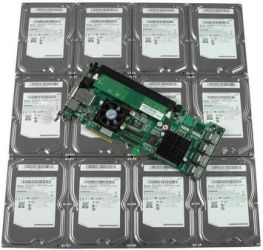
How I Learned to Stop Deleting And Love A 10TB RAID Array

Posted by Hooch Tan in "Digital Home News" @ 11:00 AM

http://www.tomshardware.com/reviews...-raid,2344.html

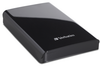
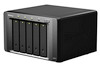
"Need more capacity? Want more hard drive performance? Knowing that hard drive prices are about to drop below $80 for a 1 TB drive, we decided to create the ultimate RAID array, one that should be able store all of your data for years to come while providing much faster performance than any individual drive could. Twelve Samsung 1 TB hard drives helped us to reach speed records and an impressive 10 TB net capacity."

Storage is cheap. 2TB hard drives have started becoming available while prices on smaller sized drives are dropping ever further. Tom's Hardware decided that this would be the perfect opportunity to see what one could do with a wad of cash and the dream of a massive storage array. I do worry about using a RAID 0 array that involves 12 drives and think that their exploration into a RAID 5 setup to be much more appropriate. Their comparison against SSDs also suggests that for performance, hard drives definitely have passed their prime. Hard drives are for economy and storage capacity now, that is clear. I've never reached 10TB myself, though I did once reach about 5TB of storage, spread across three computers, several years ago and it cost me a lot more than $1000. Anyone have bragging rights to the largest storage "facility" in their home?


Monday, July 7, 2008

Myth: Flash Hard Drives Improve Battery Life

Posted by Tim Williamson in "Digital Home Articles & Resources" @ 04:00 AM

http://www.tomshardware.com/reviews...ttery,1955.html

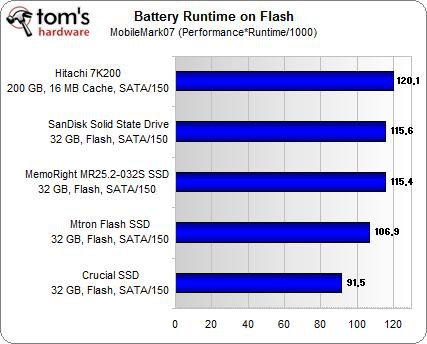
"Flash-based solid state drives (SSDs) are considered to be the future of performance hard drives, and everyone seems to be jumping on the bandwagon. We are no exception, as we have been publishing many articles on flash-based SSDs during the last few months, emphasizing the performance gains and the potential power savings brought by flash memory. And there is nothing wrong with this, since SLC flash SSDs easily outperform conventional hard drives today (SLC = single level cell). However, we have discovered that the power savings aren't there: in fact, battery runtimes actually decrease if you use a flash SSD."


Raise your hand if you thought Flash Hard Drives improved the battery life of your laptop. I fell for the same myth and am slightly disappointed, but Tom's Hardware has run a few SSD (solid-state drives) through the paces, and their results show that, even though these drives don't have moving parts, the battery life isn't any better compared to old-fashioned spinning hard drives. Their review is extremely thorough, so if you're wanting to get the low-down on SSD performance and battery life, check out the linked article!


Featured Product

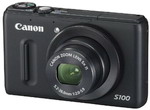
The Canon PowerShot S100 - The incredibly fun and small camera that offers you 12.1 megapixels with a bright f/2.0 lens and full 1080p video recording . MORE INFO

News Tip or Feedback?

Contact us

Thoughts Media Sites

Windows Phone Thoughts

Digital Home Thoughts

Zune Thoughts

Apple Thoughts

Laptop Thoughts

Android Thoughts

Reviews & Articles

Loading feed...

News

Loading feed...

Reviews & Articles

Loading feed...

News

Loading feed...

Reviews & Articles

Loading feed...

News

Loading feed...

Reviews & Articles

Loading feed...

News

Loading feed...

Reviews & Articles

Loading feed...

News

Loading feed...